Home  /  Work  /  PlaceNet
Product brand · Marketing · GTM

PlaceNet — a memory layer for the homes and parcels we live with.

PlaceNet tracks the full history of a property and its parcel — repairs, costs, receipts, sales, assessments, and the community context around it. We positioned the product, built the brand, and shaped a marketing engine that speaks to homeowners, landlords, and civic teams in the same voice.

ClientPlaceNet (Founder-led)
Year2025
ScopePositioning, brand, web, GTM
StagePre-launch through public beta
The challenge

A product with three audiences and one story.

PlaceNet sits at an unusual intersection: it's a homeowner tool, a property manager's source of truth, and a community/civic data platform — all in one. Founders had built deep functionality (parcel info, repair logs, cost tracking, receipts, sale and assessment history, engagement features) but every audience heard a different pitch.

We needed positioning that worked for all three audiences without flattening into vagueness, and a brand that felt civic and trustworthy — not extractive or surveillance-heavy.

The approach

One promise: a place remembers everything you do for it.

We anchored PlaceNet on the idea of property memory — every receipt, repair, conversation, and assessment captured in one continuous record that belongs to the place itself, not just its current owner. That single idea unlocked the brand voice, the homepage architecture, the onboarding flow, and the sales narrative for civic partners.

From there we designed a quietly confident visual identity (deep evergreen, ivory, copper accent), a content system organized by lifecycle moment, and a launch plan that prioritized two hero audiences before opening the platform to everyone.

Positioning pillars

Four pillars, one platform.

01

Property memory

Every repair, receipt, and assessment in one continuous, exportable record.

02

Parcel intelligence

Zoning, history, comparables, and assessments at the parcel level.

03

Cost & ROI clarity

Track spend by category and see how investment shows up at sale.

04

Community layer

Engagement tools that connect homeowners, neighbours, and civic teams.

Inside the product

Eight surfaces. One coherent story.

PlaceNet's product surfaces were designed to make complex property and civic data feel approachable. Below: the feature set we used to anchor every marketing conversation — from homeowner education to civic partner pitch decks.
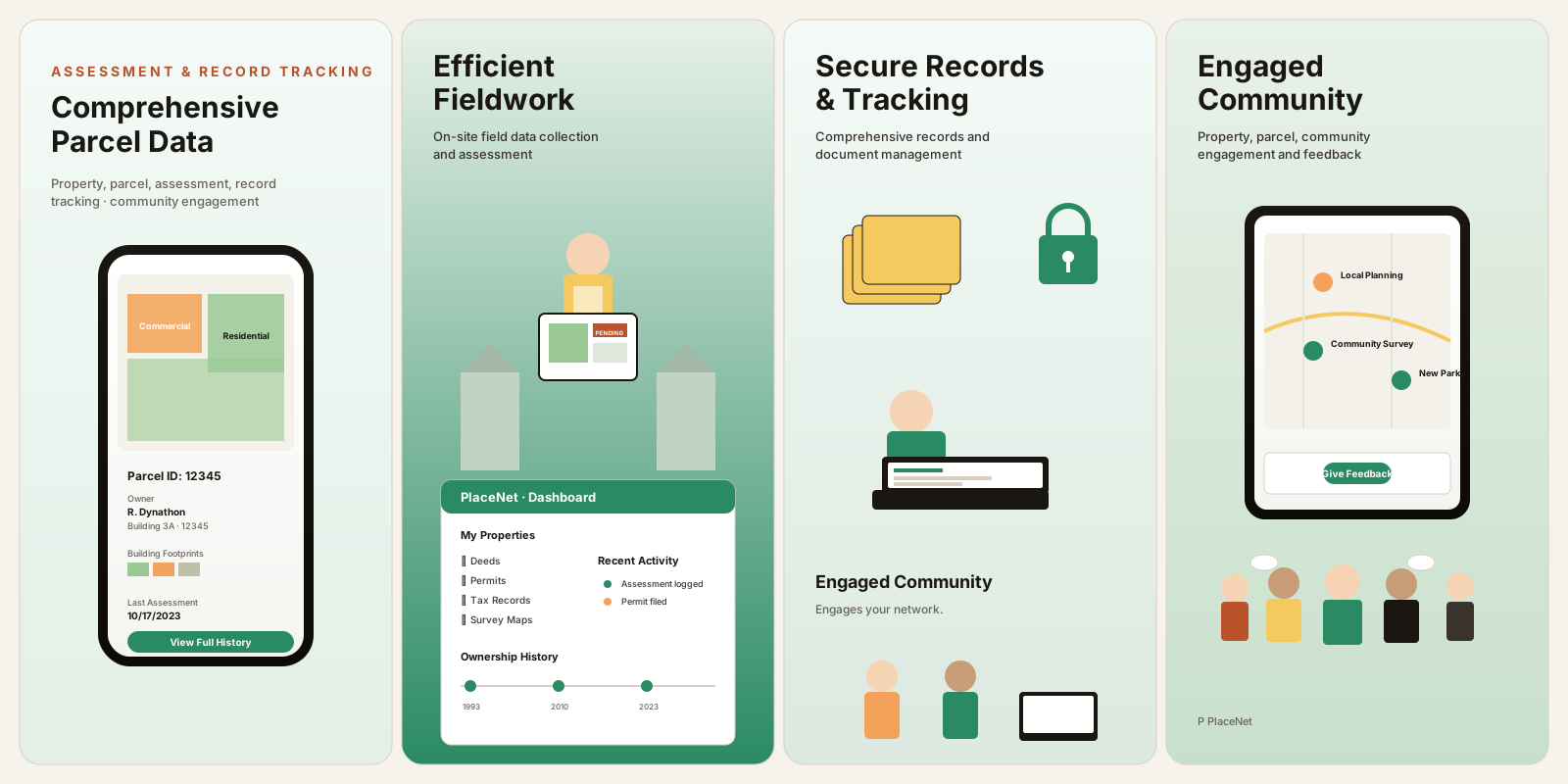
PlaceNet feature overview: parcel data, fieldwork, records, community
Assessment & Record Tracking
Four-up product overview
Comprehensive Parcel Data Parcel ID 12345 · Commercial / Residential zoning · Last Assessment 10/17/2023 · View Full History
Efficient Fieldwork Field tablet · Assessment Pending status · photos & on-site capture · sync to dashboard
Secure Records & Tracking Deeds · Permits · Tax Records · Survey Maps · Recent Activity timeline · Ownership History
Engaged Community Local Planning · Community Survey · New Parks · "Give Feedback" call-to-action
Drop the four-panel overview as features-overview.png into site/assets/place-net/ to replace this mock

The four pillars, visualized — parcel data, fieldwork, secure records, and community engagement.

A

Comprehensive parcel data

Every parcel reads like a profile: ID, owner, building footprints, residential / commercial zoning blocks, and the date of last assessment — with "View Full History" exposing the entire chain of ownership and improvements in one tap.

B

Efficient fieldwork

Built for assessors and inspectors in motion — capture photos, status flags ("Assessment Pending"), and notes on-site from a tablet, with everything syncing back to the central dashboard alongside deeds, permits, tax records and survey maps.

C

Secure records & tracking

An encrypted document vault for every property — deeds, permits, tax records, survey maps — with a recent-activity timeline and ownership-history graph showing exactly who touched what, and when.

D

Engaged community

A civic layer with local planning pins, community surveys, and "Give Feedback" entry points — turning passive residents into active participants in the parks, infrastructure, and neighborhood decisions around them.
Geo-Sync · Real-time field overlay

The block is the interface.

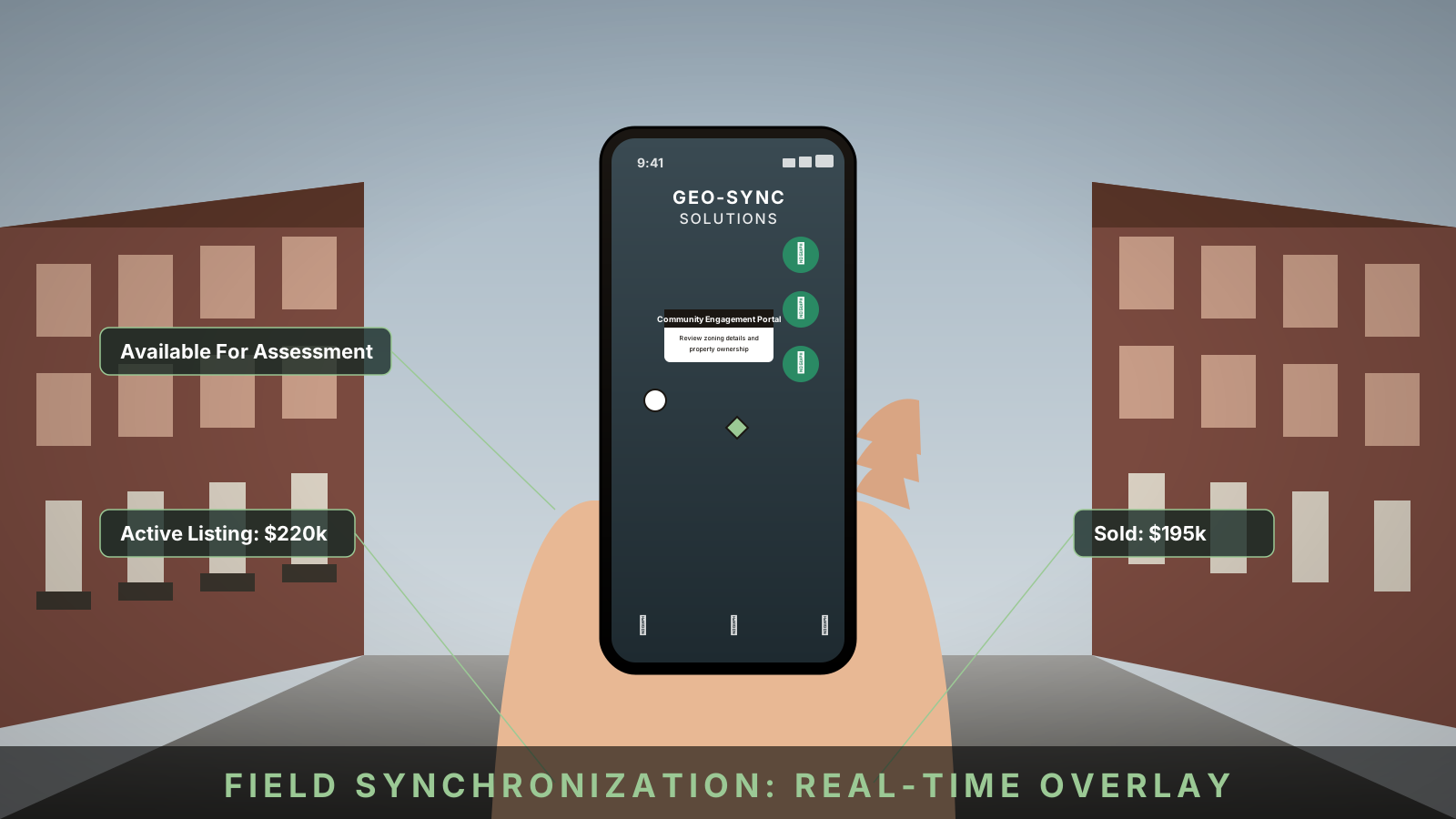
Geo-Sync turns the phone camera into a live property overlay. Walk a Philadelphia rowhome street and PlaceNet labels each parcel in real time — a green dot for Available for Assessment, a circle for Active Listing: $220k, a green diamond for Sold: $195k — with a "Community Engagement Portal" callout that opens zoning details and current ownership in a single tap.

For field teams it collapses three separate workflows — MLS lookup, parcel lookup, assessment status — into one glance. For homeowners and prospective buyers, it makes the neighborhood legible for the first time. The persistent left rail keeps map, navigation, and the live broadcast indicator one thumb-tap away.

AR overlayReal-time syncMLS lookupAssessment statusZoning & ownershipField-team workflow
PlaceNet Geo-Sync field synchronization real-time overlay
Available for assessment
Active listing · $220k
Sold · $195k
Field Synchronization · Real-Time Overlay
Drop geosync.png into site/assets/place-net/ to replace
Power-user surfaces

Built for the people who run a place.

Three deeper surfaces designed for civic teams, planners, and engaged citizens — the part of the platform where PlaceNet earns its keep.

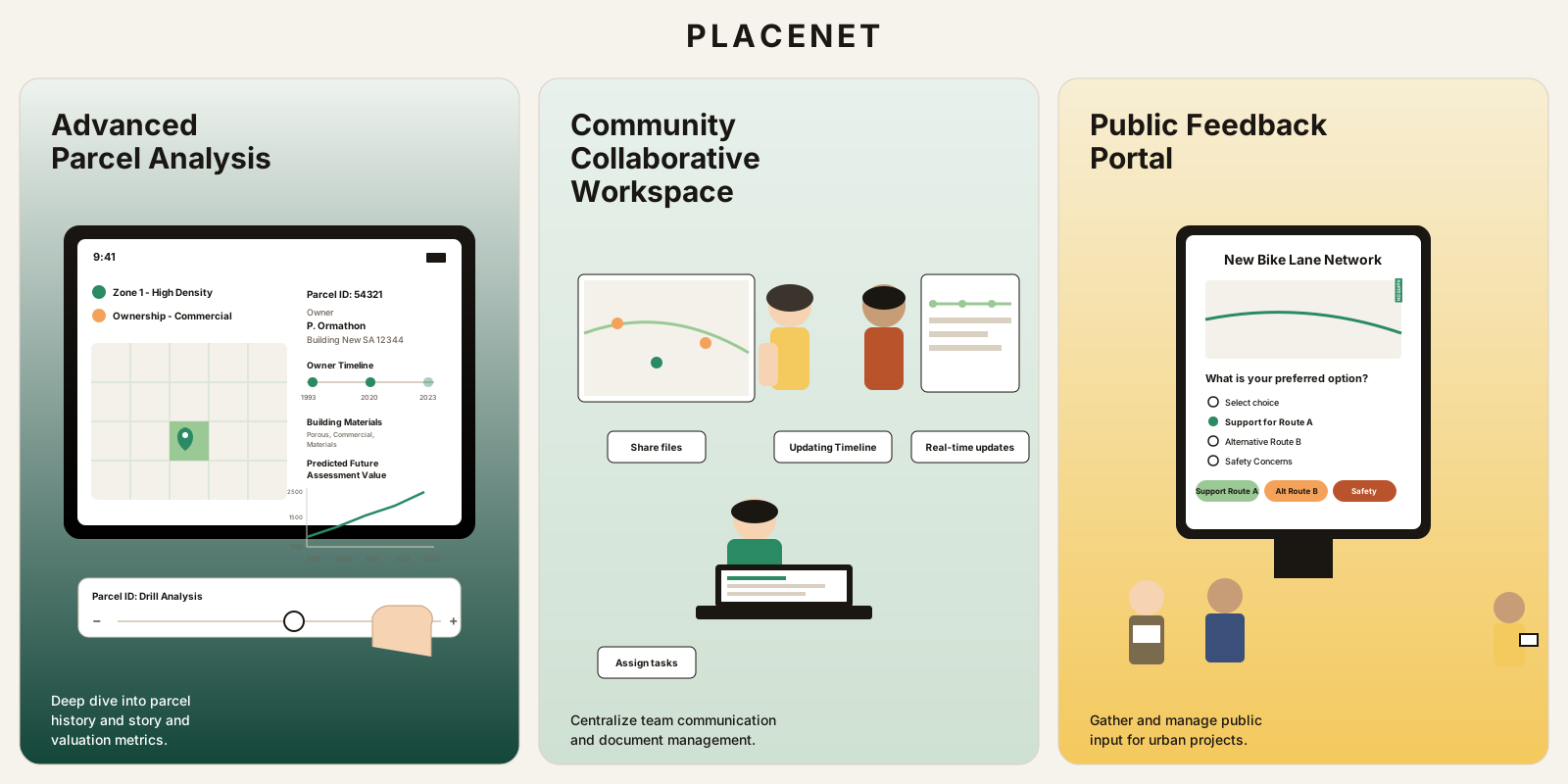
PlaceNet advanced parcel analysis, collaborative workspace, public feedback portal
PLACENET
Power-user surfaces
Advanced Parcel Analysis Parcel ID 54321 · Zone 1 High Density · Commercial ownership · Owner Timeline 1993 → 2020 → 2023 · Predicted Future Assessment Value chart
Community Collaborative Workspace Map pins · shared files & notes · Updating Timeline · Real-time team updates · Assign tasks · centralized comms
Public Feedback Portal "New Bike Lane Network" kiosk · Support for Route A · Alternative Route B · Safety Concerns · multi-choice survey
Drop the three-panel image as workspace.png into site/assets/place-net/ to replace this mock
E

Advanced parcel analysis

Open any parcel (e.g. ID 54321) and PlaceNet lays out the full story: zone classification (Zone 1 — High Density), ownership type (Commercial), an owner timeline running 1993 → 2020 → 2023, building materials, and a predicted future assessment value chart projecting where the next valuation lands.

F

Community collaborative workspace

A shared canvas for civic teams — pin a map, share files and notes, update a timeline, assign tasks, and stream real-time team updates in one place. Replaces the email-and-attachments dance that most planning teams still live in.

G

Public feedback portal

Kiosks and mobile surveys for projects like a "New Bike Lane Network" — citizens choose Support for Route A, Alternative Route B, or flag Safety Concerns, with results piped straight into the workspace for the team that owns the decision.

Deliverables

What we shipped.

A naming refinement, a complete brand system, a marketing site with audience-specific landing pages, a content calendar built around homeowner moments (buying, renovating, selling, refinancing), and a CRM-driven email program that nurtured each audience down its own path.

Positioning & pillarsVisual identityVoice & messaging Marketing siteAudience landing pagesEmail lifecycle GTM playbookSales narrative
Outcomes

Measurable lift across the funnel.

3.1x
Beta waitlist signups vs. previous landing page
42%
Reduction in CAC after audience-specific landing pages
2
Civic pilot partners secured during the launch window
A+
Brand consistency audit across product, web, and sales
Next case
Alberta Beef — "All Ways"
Continue →